I turned forty this month, and I can’t stop thinking about math.
Specifically, this math: Psalm 90, verse 10. “The length of our days is seventy years—or eighty, if we have the strength.”
Moses wrote those words, and if he’s right—if the strongest among us make it to eighty—then I’m standing at the exact midpoint of my life. Forty years behind me. Forty years (God willing) ahead. Half my race is run.
That realization hit me harder than I expected.
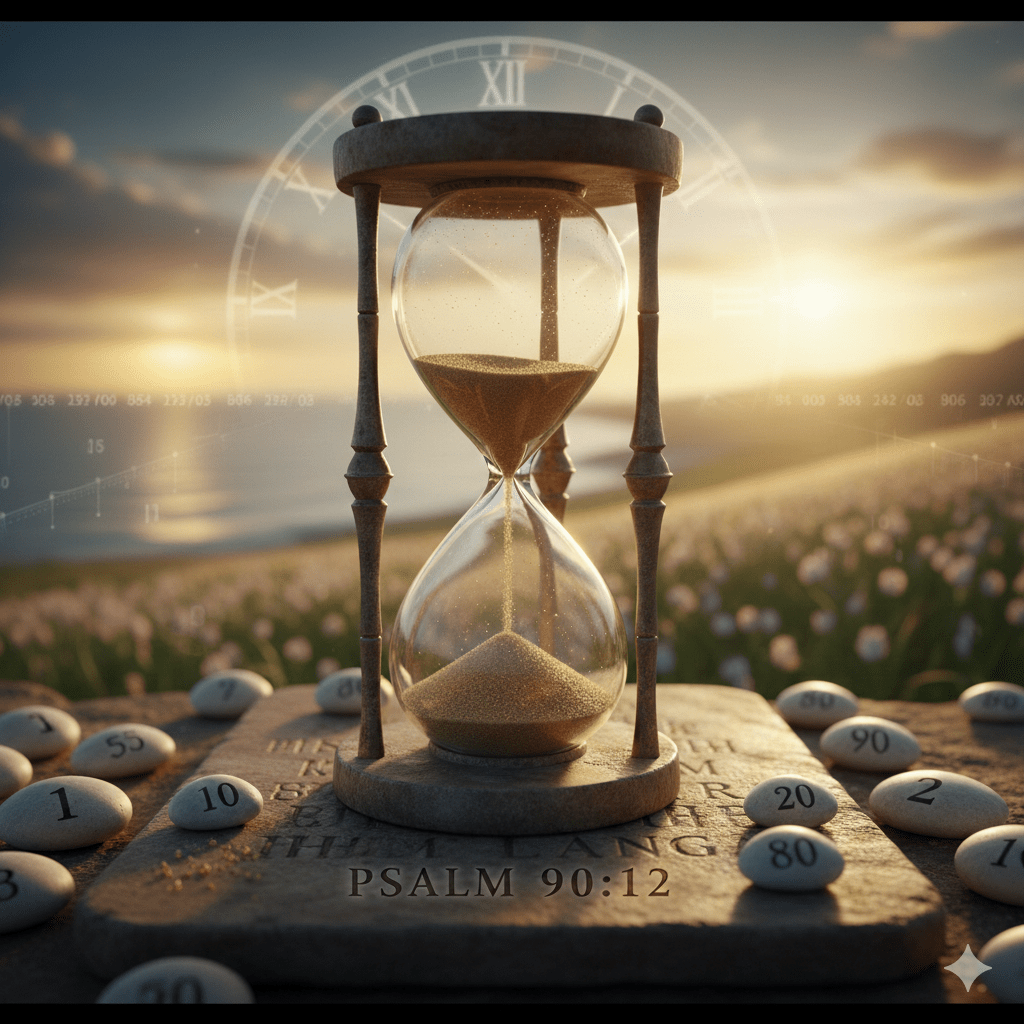
Moses knew something about forty-year periods. He spent his first forty years as Egyptian royalty, his second forty as a shepherd in Midian, and his final forty leading Israel through the wilderness. Psalm 90 came from that last season, written by a man who understood transitions, midpoints, and the strange gift of time running out. The fact that he gave the strongest man only 80 years to live is evidence of his acknowledgement of the period of grace that God had given him.
The psalm opens with eternity:
“Lord, you have been our dwelling place throughout all generations. Before the mountains were born… from everlasting to everlasting you are God.”
Moses wants us to feel the contrast. God exists outside time—infinite, unchanging. We exist within it—finite, fleeting. “We are brought to an end,” Moses writes. Our years pass “quickly, and we fly away.”
At twenty, I didn’t feel that. Time seemed limitless. I could afford to waste it, and I did. But forty has a way of teaching what twenty couldn’t.
Verse 12 contains what might be the most important prayer in Scripture:
“Teach us to number our days, that we may gain a heart of wisdom.”
Number our days. Count them. Feel their weight. Acknowledge their limit.
This isn’t morbid—it’s clarifying.
Wisdom, Moses suggests, begins when we stop pretending we have forever.
I’ve spent the past few weeks doing exactly that. Taking inventory. Looking back at the first forty years with honest eyes—celebrating what was beautiful, grieving what was lost, cringing at what was foolish. And then looking forward with new intentionality.
If I have forty years left, what will I do with them? What actually matters? What needs to change? What do I need to finally let go of? What do I need to finally pursue?
These aren’t questions I asked myself at twenty, or even thirty. But I’m certain forty demands them.
Here’s what surprised me most about Psalm 90: it’s not depressing. Despite all the talk of brevity and death and grass withering, Moses doesn’t despair. Instead, he prays (vs 14):
“Satisfy us in the morning with your unfailing love, that we may sing for joy and be glad all our days.”
Morning. The start of something new.
Even at the halfway point, God offers satisfaction. Joy. Gladness. Moses is saying that your best work, your deepest contentment, your most meaningful relationships might still be ahead of you.
I needed to hear that. The cultural narrative around forty is all about decline—your body breaking down, your relevance fading, your best years behind you. But Moses offers a different story: wisdom comes at the midpoint, not youth. Clarity comes when you learn to number your days, not when you think you have infinite time.
The first forty years taught me what matters. The next forty are my chance to actually live it.
The psalm ends with a prayer I’ve made my own:
“May the favor of the Lord our God rest on us; establish the work of our hands—yes, establish the work of our hands.”
Establish. Make it last. Make it count.
Moses asks God to take our brief lives and make them matter for something beyond ourselves. At forty, I have enough experience to know what’s worth building and enough time left to actually build it.
That’s the gift of the halfway mark. You’re not too young to be taken seriously, and you’re not too old to start something meaningful. You have the wisdom of experience and the energy to apply it. You’ve made enough mistakes to know what to avoid and gained enough clarity to know what to pursue.
So here I am at forty, halfway through if Moses is right. I won’t lie—it’s sobering. But it’s also galvanizing.
The first forty years were preparation. The next forty are opportunity.
God, who existed before the mountains were born and will exist after they crumble to dust, is inviting me to make these years count. To number my days. To gain wisdom. To let Him establish the work of my hands.
I’m not running out of time. I’m learning what time is for.
And the best miles might be just ahead.

